
Lukashenko has dominated Belarus' presidential elections since the country gained its independence from the Soviet Union. In 1994, he won the first election with more than 80 percent of the vote. Since then, he has garnered at least 75 percent of the vote in every election. The upcoming contest will likely be no different. Lukashenko has once again led the campaign season, and no clear challenger has emerged from the Belarusian opposition.
But the importance of this year's election rests not on who wins, but on the manner in which it is held. International observers have criticized every presidential vote in Belarus' history for not being free or fair. The country's last election, in 2010, resulted in a security crackdown on demonstrators from the opposition who protested the vote's outcome. The spectacle increased Belarus' isolation from the West, and the United States and the European Union enacted sanctions against Lukashenko and several Belarusian officials for allegedly rigging the vote and for responding forcefully to protests.
In response to the West's punitive measures, Belarus sought closer ties to Russia, which has remained Belarus' primary ally and security guarantor since the collapse of the Soviet Union. Belarus became more closely integrated with Russia, both economically and militarily, by joining the Eurasian Union (formerly the Customs Union) and the Collective Security Treaty Organization. Despite its occasional disputes with Russia on issues such as energy tariffs and trade ties, Belarus largely snubbed the European Union's attempts to boost meaningful cooperation through the Eastern Partnership initiative. To this day, Belarus has remained one of Russia's most loyal allies within the former Soviet sphere.
Escaping Ukraine's Fate
Ukraine's Euromaidan uprising in February 2014 has forced Lukashenko to re-evaluate his position on Russia and the West. The Belarusian leader worries that he could face the same fate as his former Ukrainian counterpart, Viktor Yanukovich. Like Lukashenko, Yanukovich spurned the European Union and its Eastern Partnership initiative in favor of forming strong ties with Russia.
To avoid a similar threat to his administration, Lukashenko has attempted to position himself as an important mediator between Russia and the West throughout the Ukraine crisis, and, by and large, he has been successful. Lukashenko hosted the Minsk peace talks, which have become the primary vehicle for negotiations between Kiev and Ukraine's pro-Russia rebels, as well as their respective foreign backers.
Lukashenko's efforts have facilitated a warming of ties between his country and the West. Belarus has taken steps to open its economy to EU countries such as Poland and the Baltic states. There have even been indications the European Union may consider easing sanctions against Belarus if it releases several political prisoners, though EU leaders ultimately decided to postpone their decision until the election runs its course. Indeed, an unnamed EU diplomat said Oct. 9 that the European bloc could temporarily suspend sanctions if the vote occurs without any political crackdowns. Therefore, it will be important to watch the fairness of the polls and Minsk's response to any opposition protests to determine whether Belarus' growing relationship with the West can be sustained or if it will be stalled, as it was after previous elections.
In the meantime, Lukashenko must address an important issue that has been raised in the lead-up to the Oct. 11 vote: the construction of a new Russian air base in Belarus. For years, Belarusian and Russian leaders have reportedly held discussions over the subject, and on Sept. 18 Russian President Vladimir Putin allegedly ordered an agreement to be made to establish the base. But on Oct. 5 Lukashenko denied the reports, saying that "talks about establishing a Russian air base on the territory of Belarus have never been conducted," and added that such speculation "disturbs and offends" him. The Belarusian leader's comments came just two days after some 1,000 people held an unsanctioned protest in Minsk against the establishment of the air base. Notably, Belarusian security forces did not disrupt the demonstration.
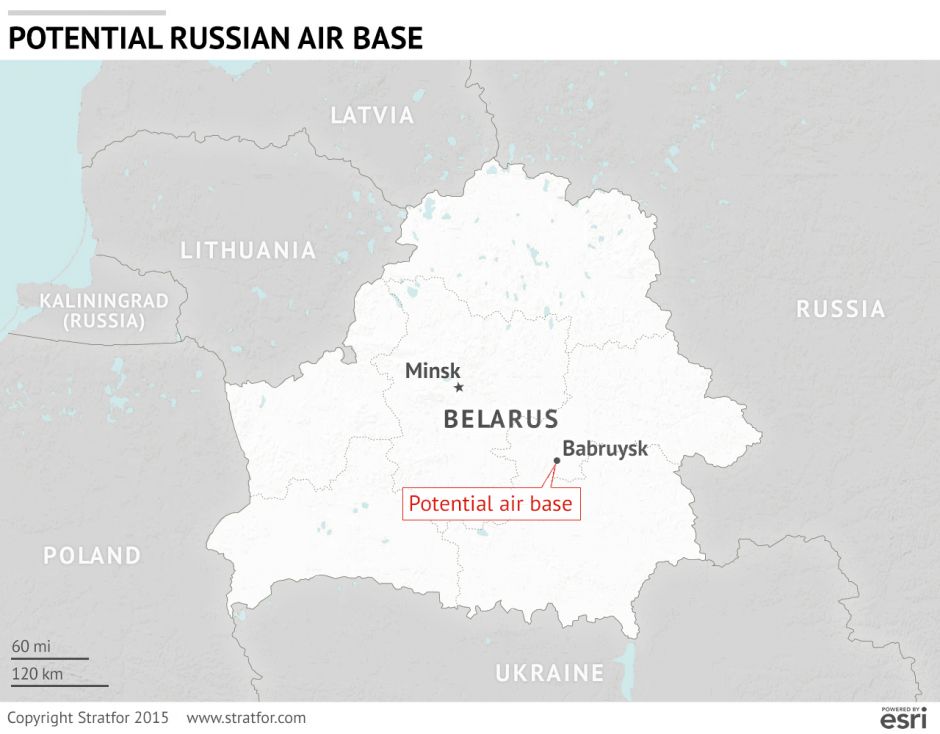
These developments raise the question of whether Belarus' historically robust security ties with Russia may be fraying ahead of the presidential election. The prospect of erecting a formal Russian air base on Belarusian soil has long been controversial, and it has become even more so as the West has increased its security assistance for Ukraine and its military buildups on Belarus' borders. However, it is unlikely that the military alliance between Belarus and Russia is under any real threat. Minsk has demonstrated its loyalty to Moscow by hosting a Russian radar station and by actively supporting joint training and military exercises through the Collective Security Treaty Organization. Given the current political climate, Lukashenko would prefer to avoid adding the Russian air base to that list. The approaching elections will be an important indicator of whether the Belarusian president will be able to resist or will be forced even closer to Moscow.
