
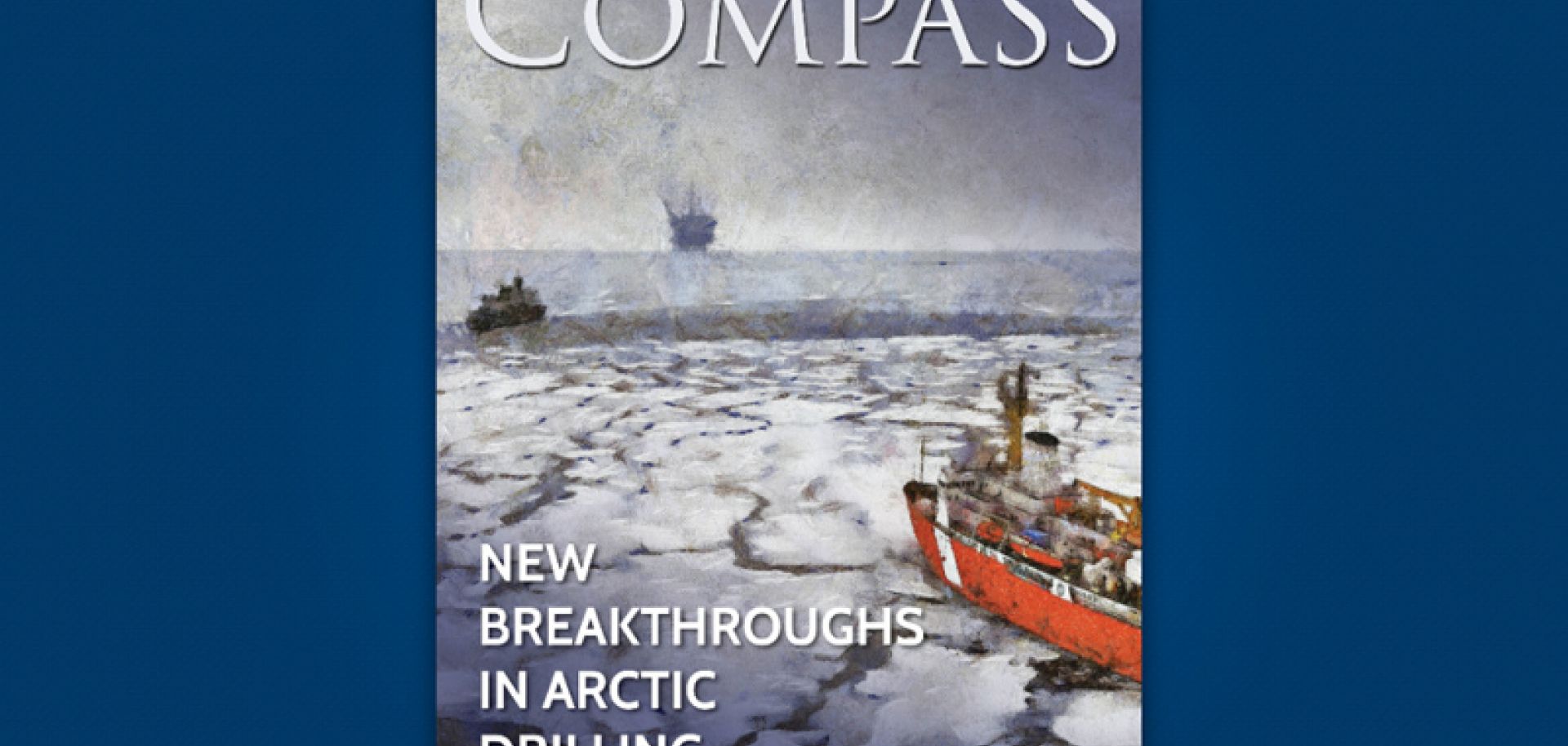
Cole Altom: Hello everyone, I'm Cole Altom, managing editor here at Stratfor, and with me today is Matt Bey, our energy analyst, with our monthly Compass preview.
Now Matt, it's the dead of summer here in Texas, so it's only fitting that our feature story would talk about the Arctic. The big news coming out is that Shell is about to resume exploratory operations up in some Arctic waters between Russia and Alaska. And that they are going to such extreme ends of the Earth, you have to think that they think it's worth their while.
Matthew Bey: Right. So I mean they’ve been looking at it for a very long time. This is not necessarily complete and entirely new. People have been going out to the Arctic looking for all kinds of resources. But you know now days, global warming, stuff is getting a lot easier for them to do.
The other reason is the USGS released a study saying that the Arctic may hold up to 412 billion barrels of oil equivalent. That's obviously a lot when you think about how much we actually consume on a daily basis. So a lot of oil companies are actually looking at that as a potential prize, and the Arctic is all ready for the United States when you look at the onshore stuff for Alaska, it's been a very important thing for a long time.
Cole: So if there is all of this potential, why haven't we seen more offshore drilling? Correct me if I'm wrong, but nearly all of the drilling so far has been onshore in the Arctic.
Matt: Right. So all the production for the most part has been onshore. So that's been going on since the 1970s, for example. So I think the first time they actually found oil in Alaska, the northern part of Alaska, inside the Arctic Circle, would have been in the '60s, basically. So it's kind of progressed from there going out towards the ocean for example. So there are actually two developments that are now in production, but both of those were discovered in the 1980s. So people have actually been drilling offshore for awhile, but it's been much more of a slow process actually going from actually finding something and actually developing it.
So the two that actually are online now, there's one in Norway and one in Russia, they were both discovered in the 1980s, they both ended up coming online within the last 5-10 years, and they both were massively over-budget, massively expensive, and it's just something that took a long time to actually develop.
Cole: Well, and that's pretty typical for some of these projects, right? It's very slow moving.
Matt: And all offshore in general for that matter.
Cole: Fair. Ok so now that they have some of the technologies that they can drill in these waters and now that the polar ice caps are in remission a little bit, some of these companies can now go into these waters. But that doesn't mean it's going to be easy for them, right. What are some of the risks they might encounter when they get there?
Matt: So there are a lot of different risks. So one of the things, even if you ignore the technology aspects of it, you have to deal with just the logistics. We are talking about a very isolated region of the world. If you look at the northeastern coast of Alaska, the northwestern coast of Alaska, there's nothing there. The biggest cities you find have 5,000 people and that's about it, and then the next one would be thousands of miles away. So you have to actually set up all your health and safety for your workers, the equipment you have to use.
So Shell, for example, needs to have a giant flotilla to actually have a convoy to go out there, so they have everything they need to do their drilling, since it's a very short drilling season, even with Global warming happening, they can't drill continuously throughout the year. There all these sort of other aspects, aside from the technical, that have to be overcome.
And there's also then, the technological ones. So this is actually something that is common in deep-water projects, in off-shore projects is they actually slowly overtime kind of incrementally add one innovation to another innovation, and then over time they slowly get and solve specific problems for specific projects. So what that means for the deep-water stuff is that we're actually going to see you know one or two kind of come online over the next 10 years and then maybe after that we'll see some more stuff happen.
Cole: 10 years is a long time. So before we go, let's talk about the opportunity cost of drilling there, right. These people are going to go in there, it's going to take 10 years, maybe 20, maybe longer if everything even goes right. What kind of technologies, in the meantime, are going to catch up with them in the next 20, 30 years?
Matt: So one of the things that is being worked on now by Aker solutions is a drill ship that would, that is designed to kind of push away the broken ice away from the vessel itself. If ice actually comes under the ship and starts to affect the actual drilling operations, that becomes a much bigger challenge to deal with. So that is one potential solution that could have a pretty big impact on drilling in icy environments for example.
And then there's also the case that other types of technologies like car batteries, things like that, will eliminate or at least lessen the need for oil or oil growth or anything like that. So if we play those issues out, it's an open question really as to whether or not the Arctic will ever become more than a niche. I mean the potential is there obviously; it just really depends on a lot of things. And Shell recognizes that. Shell is invested all over the place, but I mean, at the same time, they are an E&P company, and E&P companies have to reinvest continuously just to you know sustain production. And thinking about all the examples of oil production declining in countries, it makes sense that eventually, in their eyes, this is something they at least have to explore. And the same is true for Russia, the same is true for Norway and all these other places.
Cole: Alright Matt, thanks very much for joining us. You've given us a lot to think about. If you want to read more about this topic, our July Compass edition publishes on July 6. Thanks very much.
