
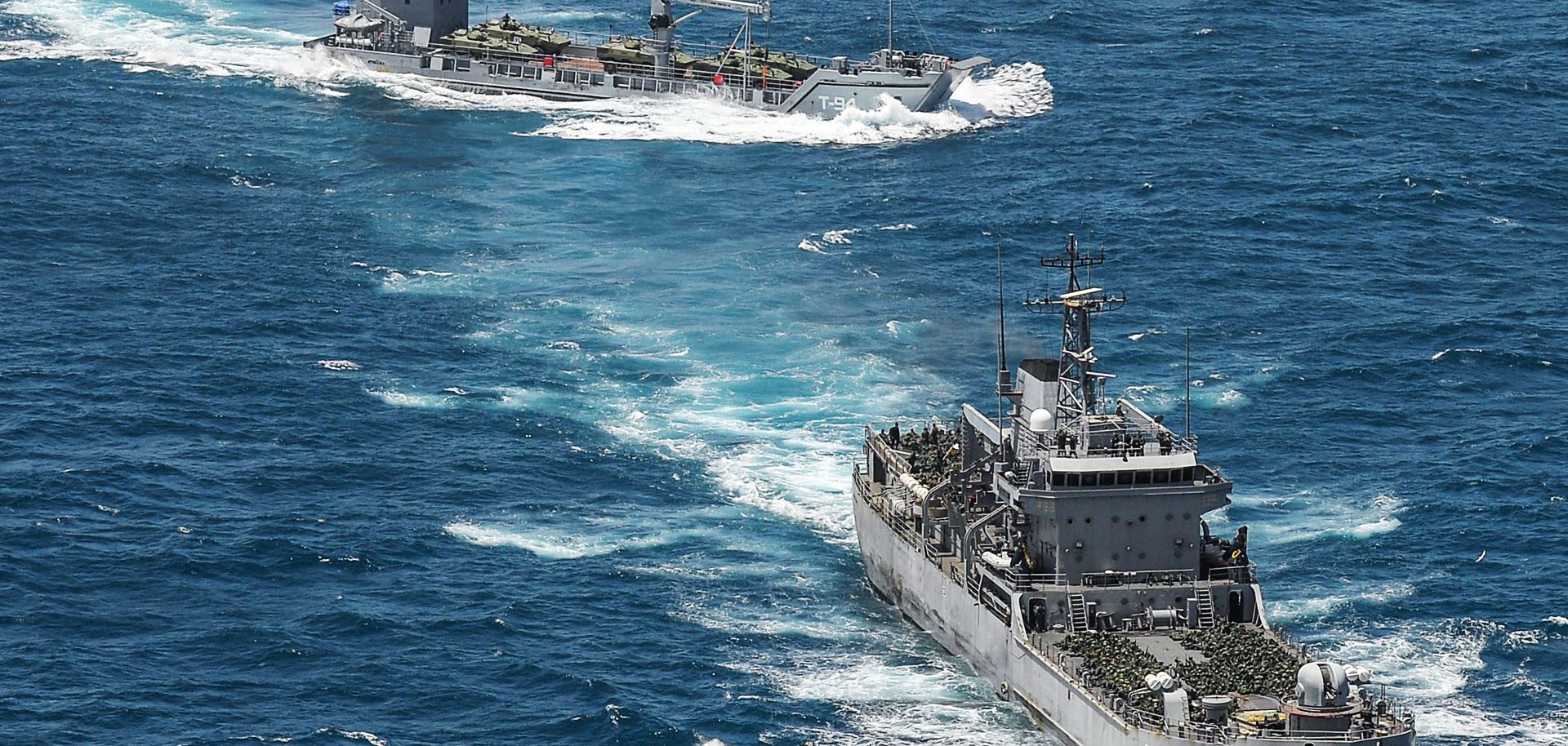
Venezuela has unilaterally extended its maritime boundary with Guyana by presidential decree. The order, which was announced in Venezuela's government-owned Official Gazette on May 27, led Guyana to announce June 8 that it would summon Venezuela's ambassador to Guyana to explain the measure. Guyana also cancelled flights by Venezuelan state-owned airline Conviasa to Guyanese airports. But while these measures are only the latest in a longstanding border dispute between the two countries, Venezuela's decision to lay claim to additional Guyanese territory could have the added effect of delaying future energy exploration in Guyanese offshore blocks.
According to the announcement released May 27, Venezuela created the Atlantic Maritime Integral Defense Zone, which includes a strip of Guyanese territorial waters extending into the Atlantic from the Essequibo River in Guyana. In essence, the decree bisects Guyanese maritime holdings and shrinks the country's claims to the offshore continental shelf. Although an international commission in 1899 drew the current border between the two countries, Venezuela has laid claim to Guyanese land west of the Essequibo River for 53 years. Moreover, unlike Guyana, Venezuela is not a party to the United Nations Convention on the Law of the Sea and does not recognize the internationally drawn maritime boundary with Guyana. In recent decades, Venezuela and Guyana worked under a U.N.-sponsored discussion process to negotiate a resolution to the border dispute, but that process stalled after one of the negotiators died and the countries never agreed on a replacement.
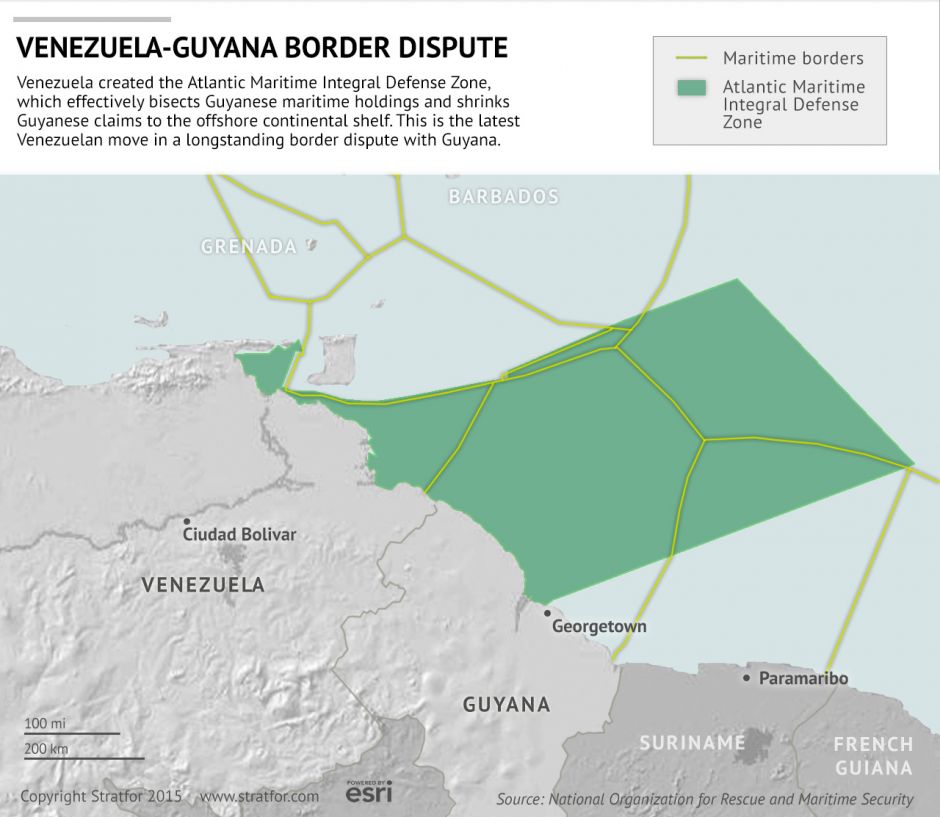
While Venezuela's presidential order is only recognized under Venezuelan law, it could complicate Guyanese efforts to attract foreign energy firms to explore and develop the country's offshore resources. By extending the Atlantic Maritime Integral Defense Zone to Guyanese waters, Caracas is now empowered to conduct military operations within that defense zone. Venezuelan military vessels could then, in theory, sail into these disputed waters, something that would likely dissuade, at least minimally, further energy exploration in the area.
Venezuela's extension of the defense zone does not necessarily mean that Caracas intends to militarily intervene in Guyana. Caracas knows that just by decreeing the law, some foreign firms will be dissuaded from further operations in the area, prolonging additional exploration and development of the offshore energy resources claimed by Venezuela. However, the possibility that Venezuela will intervene to reinforce its claim cannot be completely ruled out. With the Venezuelan government facing crucial parliamentary elections later in 2015 amid a deepening economic crisis and the government's crumbling popularity, exerting claims to Guyanese territory could boost the ruling party's approval ratings. The claim to Guyanese waters is relatively popular among Venezuelans. Action to claim that territory would likely be well received, even by some of the opposition.
