
The fall of Ramadi to Islamic State that primarily happened May 15-17 should be viewed as the most recent tactical evolution on a continually dynamic battlefront. This front runs along the Euphrates River Valley in the predominantly Sunni Anbar province. The entire range, from just west of Baghdad to the Haditha Dam has multiple strongpoints that have consistently shifted ownership in the ongoing battle with Islamic State that has raged since mid-2014.
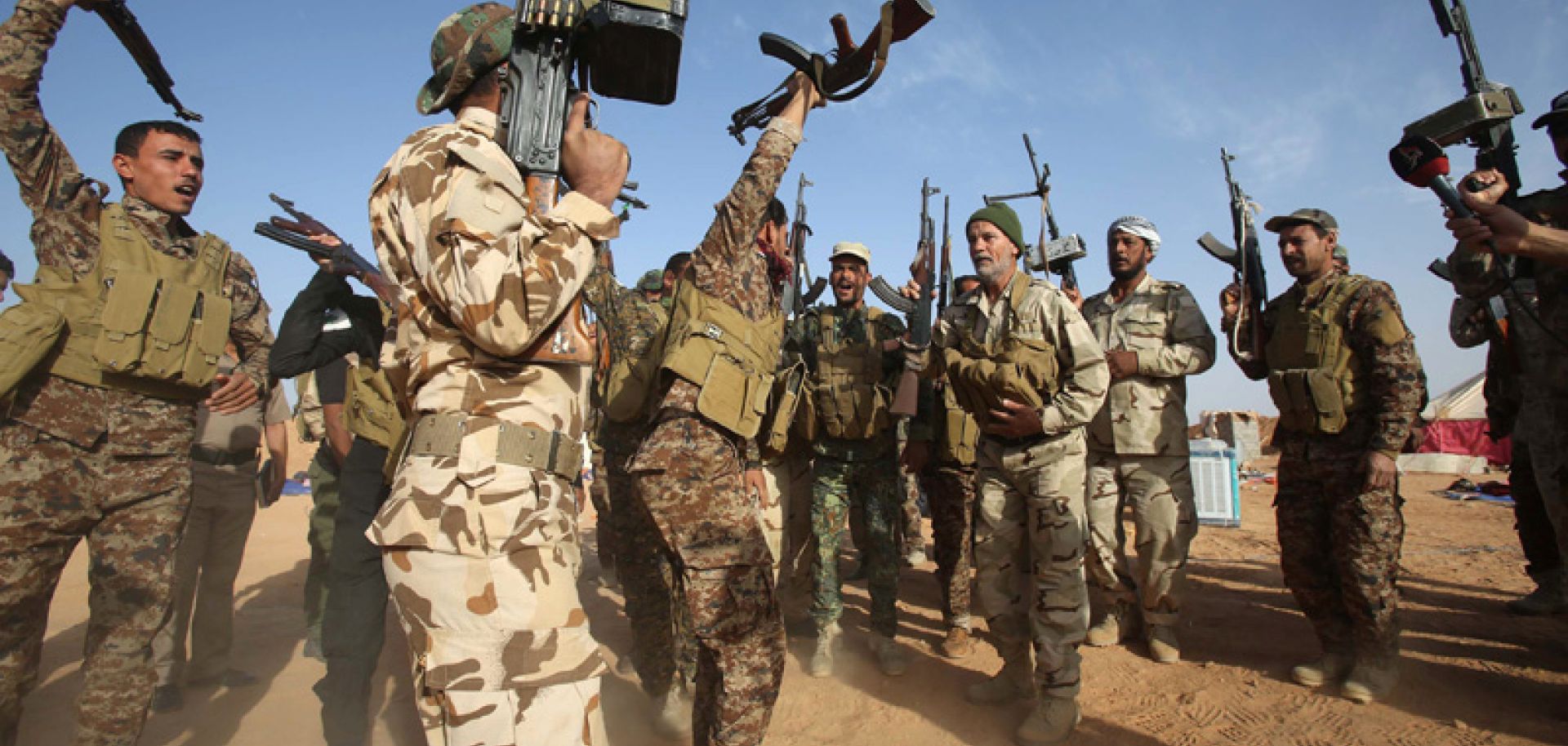
Ramadi is one of these strong points, whose ownership has consistently shifted back and forth between Baghdad and Islamic State. This most recent fall of Ramadi benefits Islamic State most in the materiel acquired that was left behind by retreating Iraqi security forces. This victory also serves as excellent fodder for the Islamic State propaganda machine. Baghdad, however, has immediately responded by marshaling forces at Al Habbaniyah military base to the east of Ramadi to include a reported 3,000-strong element of Shiite militias and seems to be setting up a very near-term counteroffensive.
Stepping back and looking at the entire war being waged in Iraq, it becomes clear that Baghdad is engaged with Islamic State heavily on two fronts in its two major river valleys. Baiji and Ramadi have been the key respective battles on both fronts. Every time Baghdad committed forces and seen success in one battle, the other battle turned against them. Baghdad has a capacity problem since it does not have enough quality troops to take and hold territory on both fronts, especially in areas that are predominantly Sunni where they are trying to increasingly project power.
To solve this capacity problem, Baghdad is left with a list of bad options to generate more manpower. These include the Kurdish peshmerga, Sunni tribal elements, Iraqi security forces being trained by the U.S.-led coalition, and/or the Shiite militias. All of the options pose serious potential risks or face major constraints. As of now, the short-term answer has been to leverage portions of the Shiite militias. The biggest concern in using Shiite militias in Sunni areas is, of course, the backlash this could incur since it might further exercise the sectarian divisions that fuel large portions of this conflict already.
This is the real significance of Ramadi's most recent fall. It is forcing the hand of Baghdad to use large numbers of Shiite militias in predominantly Sunni areas. This is not a guarantee for sectarian backlash, but it does create the ever-increasing space for it.
Overall, the war in Iraq is shaping up currently to be a war of attrition as all sides are pouring resources into two fronts that are grinding back and forth. In fact, the Ramadi success is likely a result of massive Islamic State resources being shifted from Syria. As of yet there are no signs that any of the sides are breaking. But the very large mass of forces arrayed against Islamic State has the advantage in resources, but only if they can continue to work against Islamic State and avoid infighting.
