
Deploying assets to Jordan greatly facilitates the Emiratis' operations by shortening the distance between their staging bases and target areas. When coming from airfields back home, the UAE fighter jet fleet had to cope with considerable transit periods that involved multiple aerial refuelings. These longer distances also affected combat payload, increased crew fatigue rates and resulted in longer maintenance periods for aircraft once the missions were over. Flying from Jordanian bases, which are closer to the combat theater, will allow the UAE fighter pilots to increase their sortie rates while improving their flexibility and responsiveness.
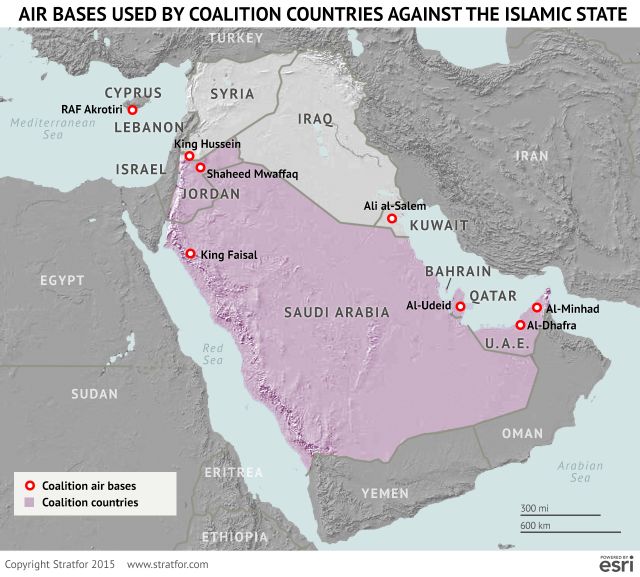
In addition to the political message of support Emiratis flying alongside Jordanians in retaliatory strikes sends, the renewed UAE presence also has a positive material effect on the Jordanian's capabilities. As seen in the footage of combat sorties Jordan has released, most of the munitions carried by the Jordanian F-16 fighters were simple gravity bombs or unguided weapons. This indicates a paucity of guided munitions in the Jordanian arsenal — unguided bombs are not a preferred weapon because they are far less accurate than guided munitions, and their low accuracy hurts mission success rates and increases the risk of collateral damage. While they operate alongside Emirati F-16 Desert Falcons, a much more advanced version of the Jordanian F-16s, the Jordanians may now have access to the much more potent UAE munitions inventory. The UAE also brings considerable logistic assets to the theater that the Jordanians could access, such as experienced maintenance crews, diagnostic equipment and spare parts.
Previously, UAE aircraft had flown only against targets in Syria. Now that Jordan allegedly has expanded its campaign to include Islamic State targets in Iraq, the outstanding question is whether the Emiratis and other Arab participants in the regional coalition will follow suit. Not only would greater Gulf Cooperation Council military involvement in Iraq put more regional political interests in play, it also would raise concerns about coordinating with Iranian air operations in Iraq. Under these circumstances, the United States likely would continue playing its crucial command-and-control role in order to prevent an entanglement with Iranian operations.
