
Paul Floyd: Hi, I'm Paul Floyd, a military analyst here at Stratfor.
Scott Stewart: And I'm Scott Stewart, Stratfor's vice president of tactical analysis.
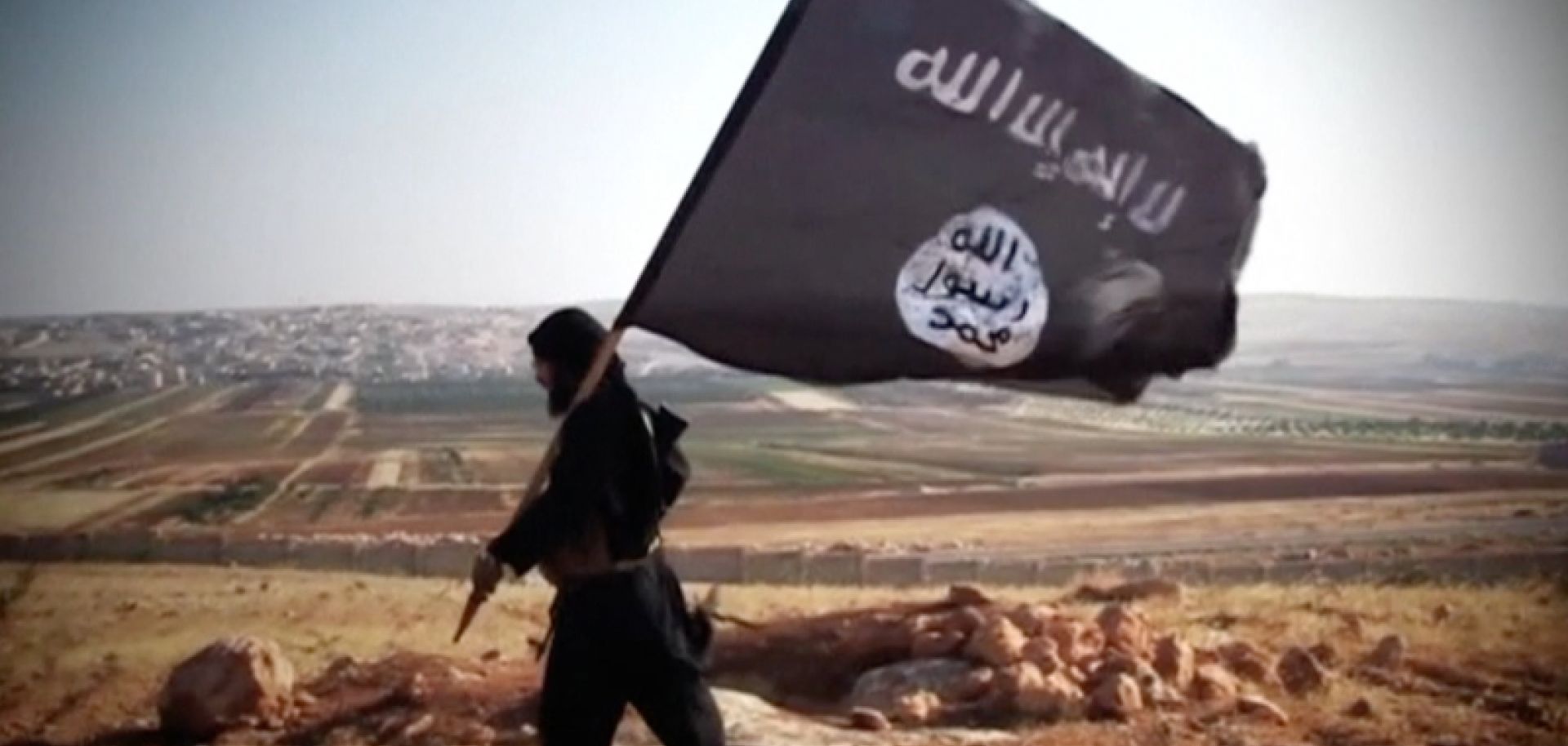
Paul: Today we're going to look at the comparisons between the Islamic State and al Qaeda, but we are also going to note some of the very real differences and how those are just as important. What we've seen recently on the battlefield is the Islamic State has made some serious gains, and because of that and al Qaeda's relatively quiet behavior in comparison, there have been lots of mumblings that the Islamic State is the more capable threat to the world in the sense of extreme terrorism.
Scott: I think it's important that when we look at the differences between the two organizations, we really look at how they were founded and what their objectives are on the battlefield. When we look at al Qaeda, it was really formed as a vanguard organization intended to really be a global facilitator of the jihad to bring the caliphate into being. We basically had an organization that was founded by a Saudi millionaire but was always relatively small, they never really posed much of an insurgent threat on the battlefield, and they always operated under the leadership of another Islamic polity. Whether that meant being stationed in Afghanistan under the Taliban or even in Sudan, they were always subservient and never really ruled themselves. On the other hand, with the Islamic State and its predecessor organizations, they were founded by Abu Musab Zarqawi, who was a Jordanian street thug. His organization has always brought those characteristics with it. Not only have they been more regionally focused, but they have also been brutal. They don’t care about the big picture. They are very intransigent and very strict in how they do things. They really don’t care what the rest of the world thinks.
Paul: I think it's also important that when you articulate who is a threat, you have to say who they are actually a threat to. So are we talking about a threat to the western powers versus a regional threat?
Scott: That’s one of the things. We understand these are militant groups, and they use different types of militant tactics. They'll use terrorism, they'll use insurgency, they'll use conventional warfare as we are seeing right now with the Islamic State in Iraq and Syria. But when it comes to those various types of tactics, it takes different training. Someone like yourself who is a former Ranger, you can be very good at conventional warfare or irregular warfare, but if I was to take you and send you into a foreign culture and ask you to set up a terrorist cell and then conduct some terrorist operations — say a vehicle bombing — that would be a challenge for you because you really haven’t received that type of training. So, in order to be able to blend in, to travel, to set up clandestine networks, it's really more akin to espionage than it is conventional warfare. So there are different skill sets that require different training, and that's one of the big differences between al Qaeda and the Islamic State. Al Qaeda has really been more focused traditionally on terrorism, on trying to reach out and conduct attacks in various parts of the world — including the United States and Europe — and the Islamic State really hasn’t developed that sort of capability or really even the training camps and resources at this point.
Paul: especially on a global scale, we've seen the State prove historically that they've had good terror tactics in Syria and Iraq, kind of in this regional sense, and now because of the battlefield situation, they have become more conventional in their attacks but still maintain those terrorist networks regionally. When you talk about that global footprint and the ability to try and work something in the Western countries, I agree with you that al Qaeda is much more of a threat in that sense. That being said, one of the big things being pointed out is the idea that a lot of the foreign fighters that are working for the Islamic State could filter back in and become a threat regionally, and I wondered if you could speak to that.
Scott: Yes. That's an important thing to look at, but then again, whether its an American of British or French jihadi that travels to Syria and undergoes the training there, they're being trained in what we went through in the army as basic training. You're learning to fire your assault riffle and learning to throw grenades, use anti-tank weapons like the RPG, some physical training type stuff, small unit tactics, but that doesn’t really translate directly into conducting mass or large scale terrorist attacks in a non-permissive environment. Recently, we saw an American jihadi used in a car bombing, and that’s one of the things with the Islamic State and Jabhat al-Nusra. They will combine terrorism even in their conventional tactics where they will use a car bomb to open up a checkpoint to attack a facility. But at the same time, taking that operative and sending him back to America to construct a car bomb and use it in an attack in the United States is really something quite different from what they've been able to do.
Paul: Fascinating Scott, and thank you. For more on this issue and others, please visit Stratfor.com.
