
Labor costs are only one part of the problem. Many of South Africa's platinum, gold and diamond mines have operated for years, leading to lower ore quality and deeper and narrower mines. Narrower mines limit the amount and type of equipment miners can use. Deeper mines mean that mining companies have to enact more health, safety and environmental measures and laboriously move people and machinery into place. This requires more time, more labor and more expenses.
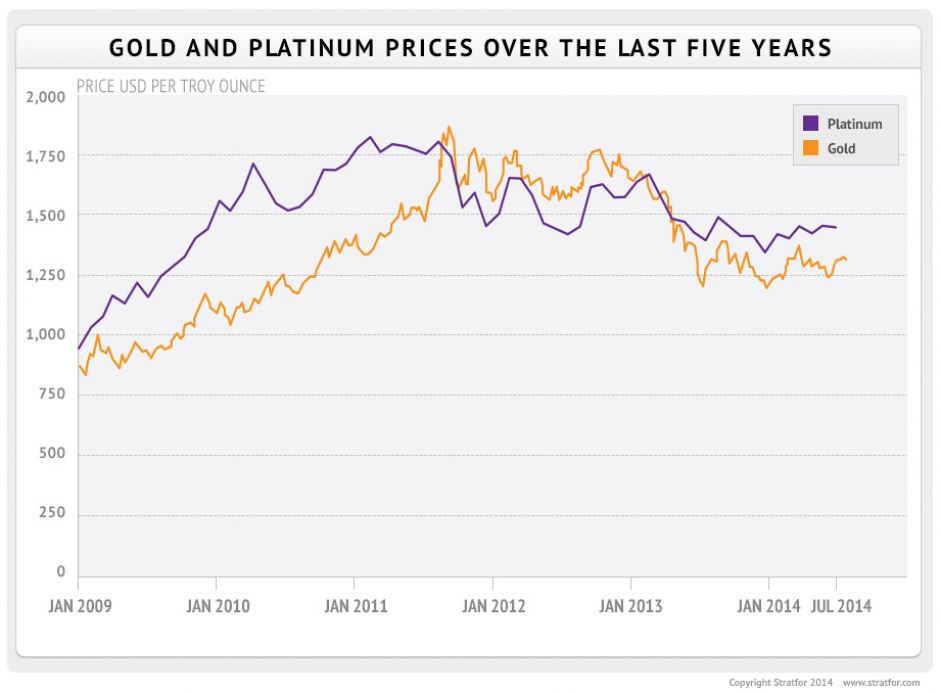
However, Anglo American Platinum's decision to focus on mechanized mining is by no means the result of the latest strike. Unions in South Africa have constrained the mining industry for some time, and in the gold and platinum sectors, where labor makes up an estimated 40 percent of total costs, mechanized mining has become much more economically viable. This transition has also become necessary in the gold sector; the hazardous deep drilling required to find substantial amounts of ore far from the surface has made finding new technological means of extraction an imperative for the mining companies.
Although Anglo American Platinum wants to get rid of its most labor-intensive mining operations, either through sales or by isolating them in a separate holding, the company still plans to invest heavily in the further development of mechanized mines that are seen as more promising. Anglo American Platinum said it could invest up to $9 billion in its remaining mining operations over the next decade.
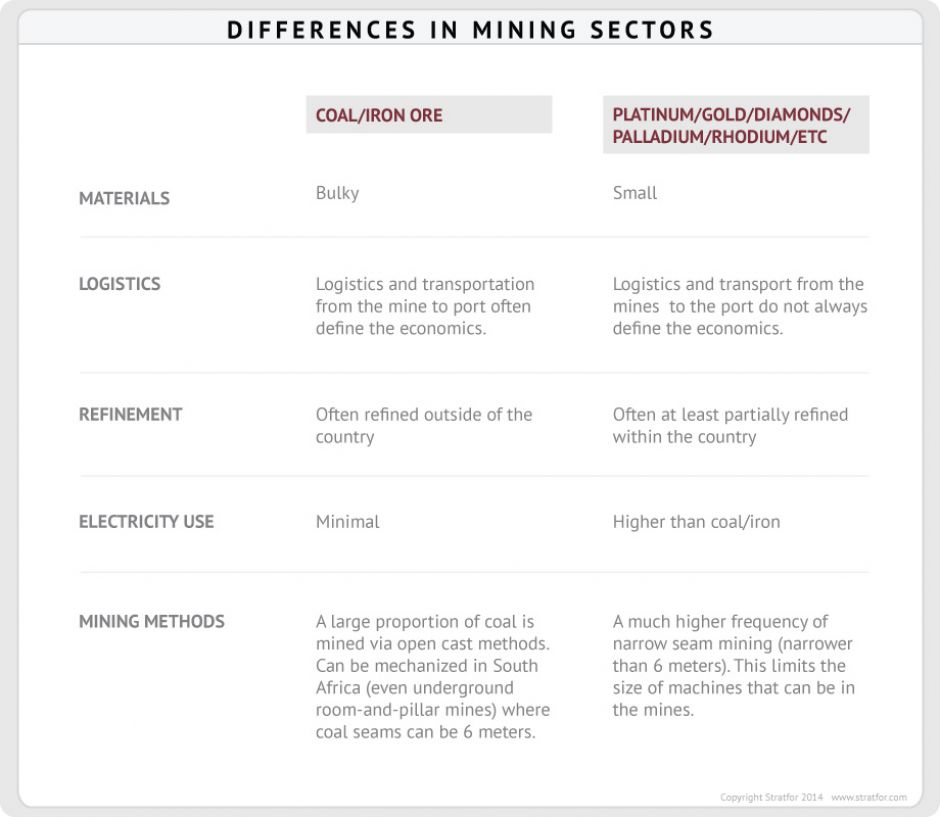
The reason that coal mining is much less labor intensive than gold and platinum mining is that coal mining companies have already focused on more mechanized operations in South Africa, albeit in a different way. This could inform the decisions among platinum and gold mine operators as they seek to deal with labor relations in South Africa. Most coal mines are opencast or open-pit, allowing for the use of big machinery and the movement of large quantities of rock, and these methods may not work as well for platinum mining. Platinum mining companies have already begun experimenting with open-pit operations to supplement the aging underground mines. Problematically, the platinum ore grade is already very low to begin with, and a further decline by 1 or 2 percent as a result of different mining methods would be significant.
A transition to greater mechanization in the gold and platinum sectors would inevitably lead to job losses. Although mechanization could offer higher wages and safer working environments to some mine workers, laying off the rest could put stress on the South African government, which is already struggling with unemployment in the country. This means the government will try to shape the mining environment by balancing the needs of businesses with those of laborers. In the past, workers criticized the government for being too friendly with the mining companies, but the mining corporations are likely to issue criticism of their own if the government speaks up for laborers by discouraging the use of greater mechanization in mining.
