
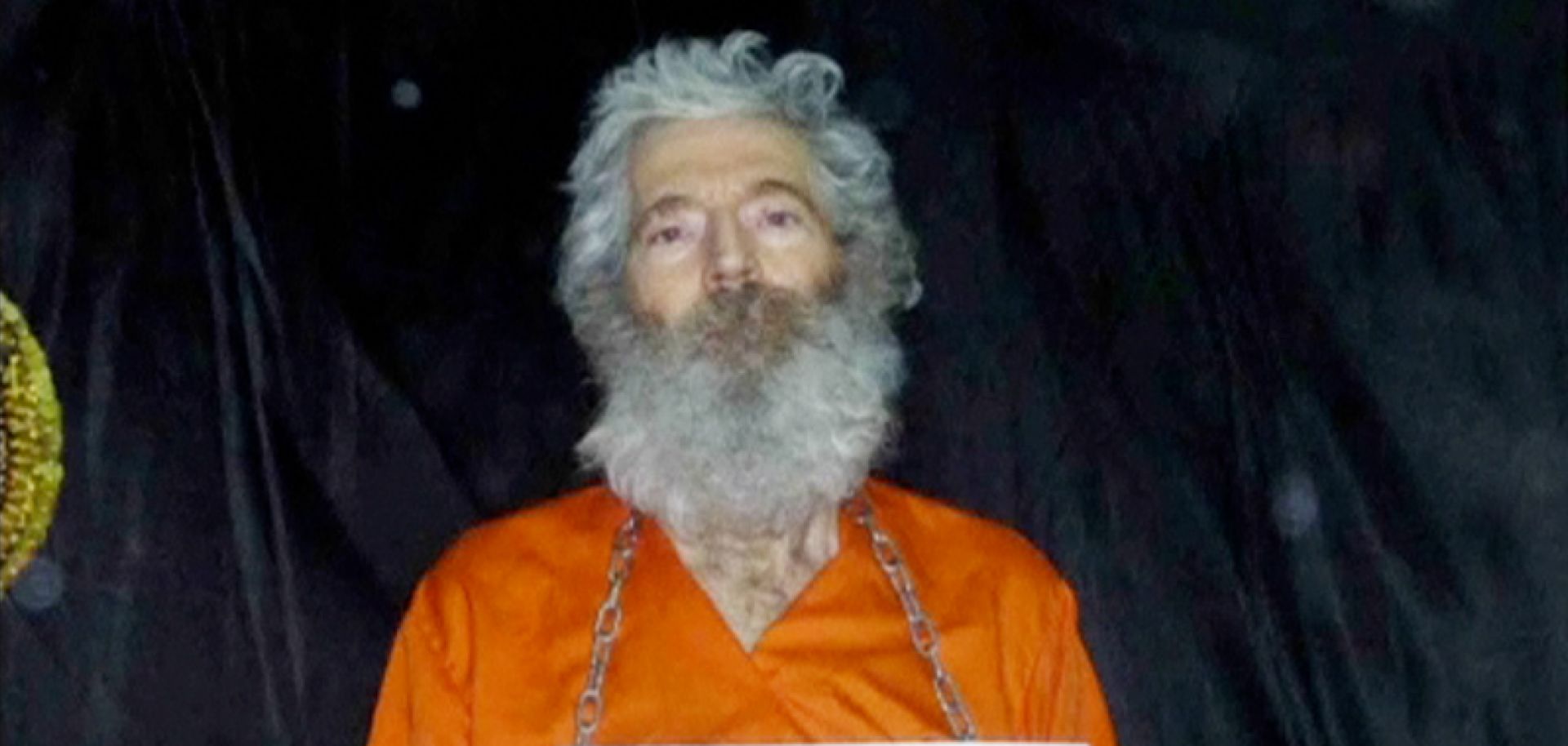
Hostage-taking and debriefings have always been of interest to me, since I conducted a good number of them in my years as a special agent with the State Department. We looked at the case of Robert Levinson in January 2013, when newly released images surfaced in the media. Robert Levinson is a former FBI agent who disappeared in 2007 and is believed to be in Iran. At that time, I discussed the value of "proof-of-life" images of a hostage surfacing in the media and discussed the challenges related to the long-term care and feeding of any hostage, especially while being hunted by agents of the FBI, State Department and the CIA.
Last week, Adam Goldman, a journalist with The Washington Post, wrote a fascinating story about Levinson, with new revelations that Levinson had secretly been working for the CIA in a rogue operation, clandestinely operated and tasked by CIA analysts at the time he disappeared. Some cases you just can't make up, and I've always believed the truth is stranger than fiction. If in fact Levinson was working for the CIA in an off-the-books collection mission, it makes perfect sense that he was grabbed by Iranian security and intelligence services, suspected of committing espionage on foreign soil.
I also find the case of personal interest. Why?
Before he disappeared in Iran in 2007, Levinson allegedly met with Dawud Salahuddin, also known as David Belfield. Belfield is a fugitive wanted for the 1980 murder of an Iranian dissident and diplomat, who was killed at his home in Bethesda, Maryland. The attacker disguised himself as a U.S. Postal employee, knocked on the door and shot the Iranian point-blank, then fled the country. I was one of the first responders present on the scene at the house the day the Iranian diplomat was shot and killed. Many years later, as an agent with the State Department, I continued to look for the killer. At the time, we believed the shooter had fled to Iran and was being guarded by Iranian security.
If The Washington Post story is true, the latest revelations about Levinson working for the CIA doesn't bode well for his likelihood of release, although I'm sure that his interrogators figured out his true employer and mission a very long time ago. The very public revelations that Levinson may have been working for the CIA places both the U.S. and Iranian governments into an almost impossible negotiating position. In order for the Iranians to release him, the Iranian government would need to admit that they held him captive, which they have denied.
On a positive note, the new revelations about Levinson's true mission and job duties will renew pressure on the U.S. government to do more to release one of their own from behind enemy lines. In the worst-case scenario, if Levinson was engaged in an unsanctioned and rogue CIA intelligence collection operation, he very well could be left out to dry. But I remain hopeful the NSC and the State Department can figure out a way to bring him home alive.
