
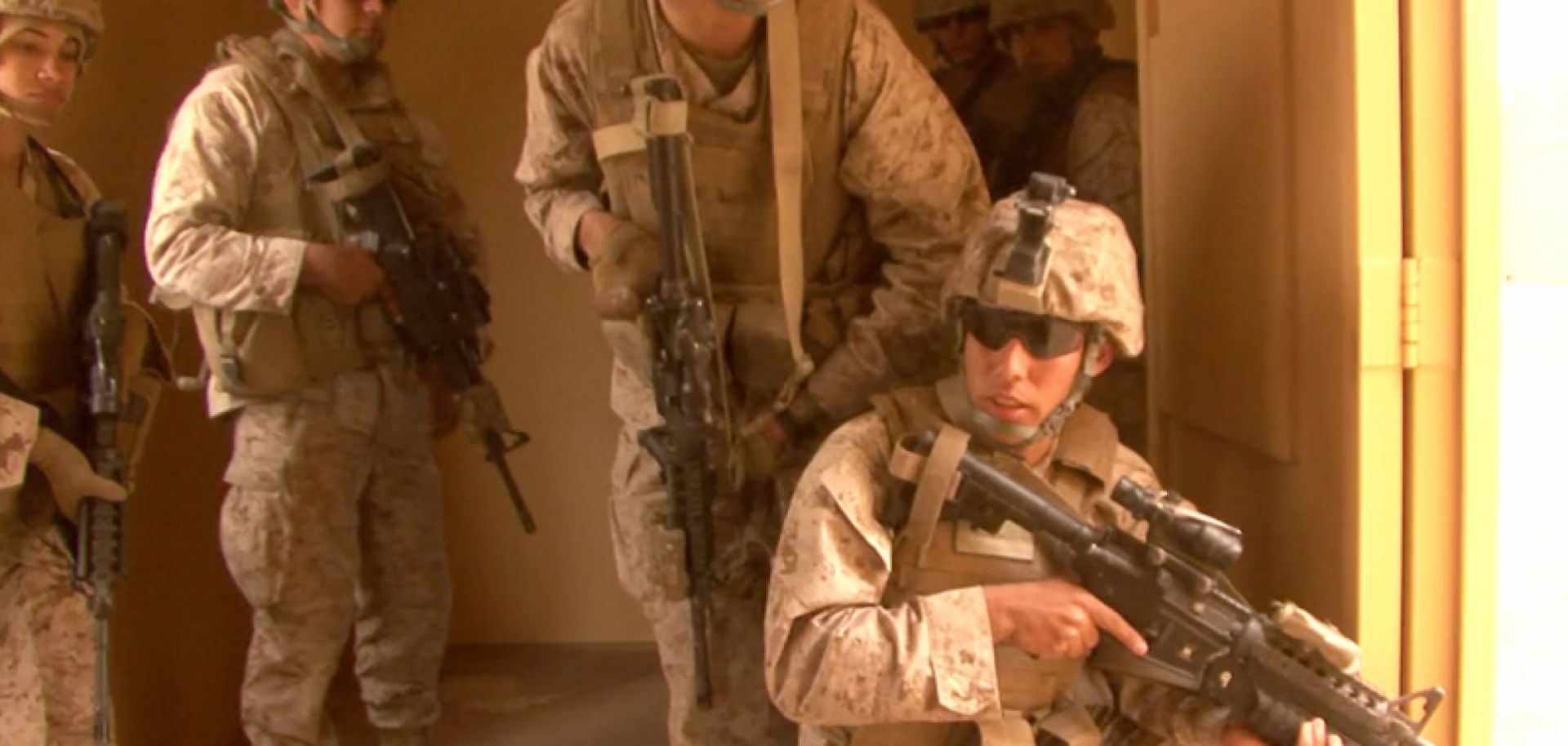
On Oct. 5 separate units from the Joint Special Operations Command conducted what seem to be disconnected operations in the Libyan capital of Tripoli and a Somali coastal town. The mission of both operations was the capture of a high-value target. The Libyan operation was successful in capturing its designed target, but the Somali mission was not. Members of the Naval Special Warfare Development Group came under fire as they were breaching the targeted compound and were forced to withdraw back to sea without the main target. The use of these premier special operations forces in direct action raids in tumultuous hot spots, 3,000 miles apart in this case, highlights the evolving U.S. "small footprint" strategy.
This specific strategy started to take shape as the wars in Iraq and Afghanistan were wound down. It takes advantage of the capabilities and techniques perfected in hunting high-value targets operating within civilian populations in these theaters. It was realized that the skills and assets required to track and then kill or capture key individuals could be used in a broader global counterterrorism role. The idea being that removing key individuals from enemy networks degrades their capability. So as more and more of these U.S. assets have been freed up from dwindling wartime requirements, they have been pushed to other unstable parts of the world where the enemy is comprised of small, local and diffuse networks.
It is a strategy born of U.S. military capabilities, political constraints and enemy tactics. These assets are a combination of intelligence, surveillance and reconnaissance platforms as well as intelligence units that can monitor a region and track potential targets. Additionally there are special operations forces who can train local units or conduct direct action missions and a variety of platforms that can do accurate strikes with precision-guided munitions, plus all the requisite support units that handle logistics. These elements are put to together into task forces that can vary widely in size, but they're relatively smaller than a brigade combat team. Their presence also has less permanence and the missions are accurate pinpricks compared to the sledgehammer of conventional units.
Combined together, U.S. security planners are provided a potent package for monitoring problem regions. Furthermore, when the opportunity presents itself, planners can take action against specific threats. In other words, they can project military power briefly into places were a large-scale, permanent ground military presence is not possible or politically palatable. These operations have a variety of constraints that vary depending on which specific asset is being used. One of the most common has been the drone strike, which puts little to no military personnel at risk but can cause collateral damage with civilians that is extremely politically unpopular and increasingly attracts international and domestic blowback. Additionally, it is hard to confirm the target has actually been successfully hit. It not uncommon for supposedly dead targets to pop back up over and over again. Killing a key individual also precludes any possibility of exploiting them for further intelligence.
Direct action raids by special operations forces like we have seen in Somalia and Libya avoid many of the drawbacks of drone strikes. This is why a raid by these forces was chosen over a targeted strike by precision-guided munitions in the Osama bin Laden mission. But raids have their own potential pitfalls. The recent Somalia operation demonstrates this best. These units are extremely well trained and are supported by numerous assets, but they are effectively behind enemy lines and outnumbered and if something goes wrong, there could always be severe consequences. The infamous Blackhawk Down incident in Somalia, in that case a mission success in that it captured the desired target, demonstrates the potential political fallout from dead American soldiers. Also, like drone strikes, these raids are often seen as violating the sovereignty of the local government. Even less politically acceptable however, is large-scale U.S. deployments abroad that are costly in both blood and money.
So the use of multiple "small footprints" will continue to be one of the primary tools for American counterterrorism. Direct action raids by elite units will continue to be a working part of this strategy, but it will not be the only one. Potential costs and military requirements will drive how planners attempt to continue pursuing effective counterterrorism abroad.
