
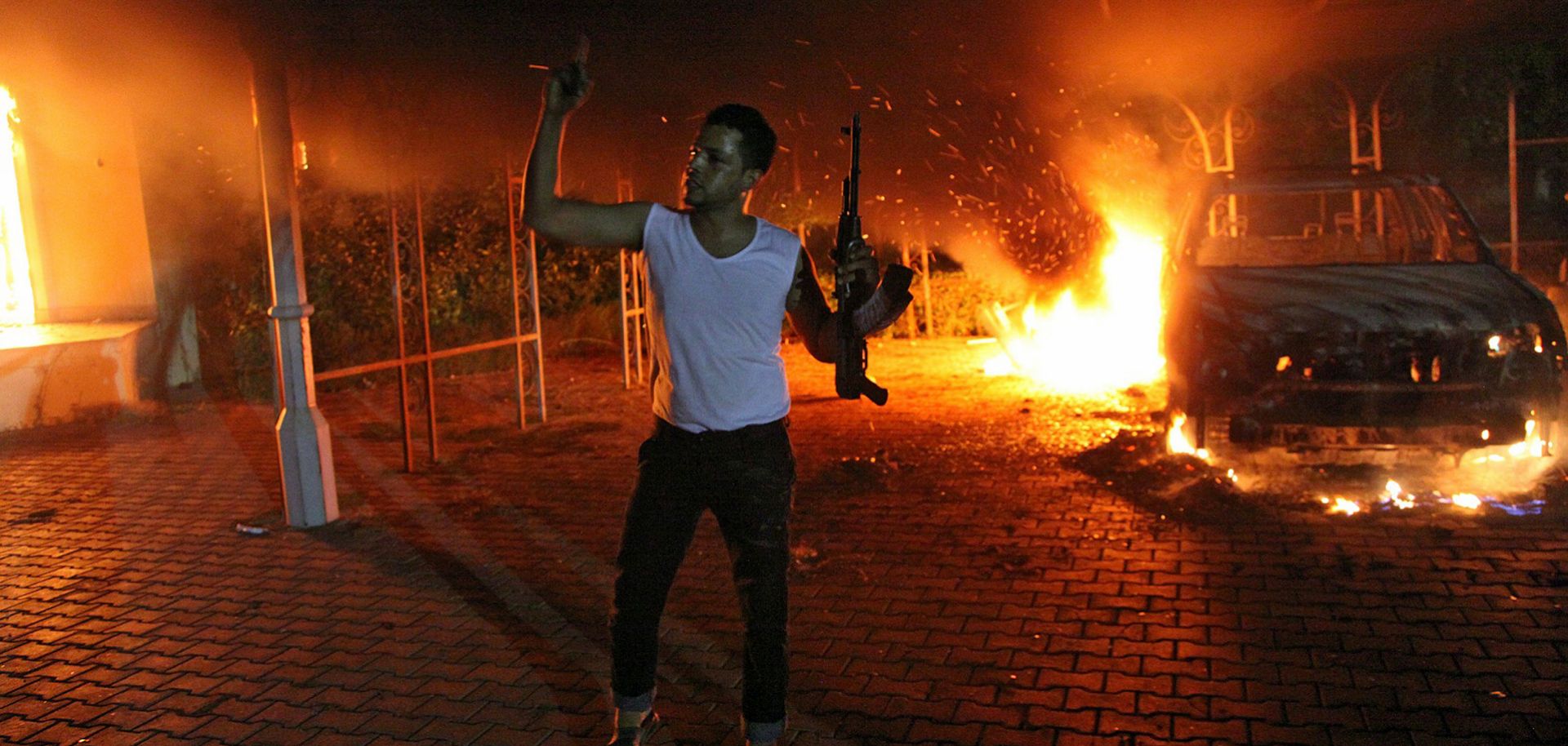
An armed man waves his rifle as buildings and cars are engulfed in flames after being set on fire inside the US consulate compound in Benghazi late on September 11, 2012. An armed mob protesting over a film they said offended Islam, attacked the US consulate in Benghazi and set fire to the building, killing one American, witnesses and officials said.
A group of armed men attacked the U.S. Consulate late Sept. 11 in the eastern Libyan city of Benghazi. U.S. President Barack Obama confirmed Sept. 12 that four Americans, including U.S. Ambassador Christopher Stevens, were killed in the attack. According to media reports, the consulate officials were killed when a rocket-propelled grenade was fired at their car as they were leaving the building.
Purportedly conducted in response to an anti-Islamic video made in the United States, the attack may herald further unrest among Arabs unhappy with the video's contents. Tripoli's response to the attack — and how the central authority handles Islamists in such strongholds as Benghazi — will influence U.S.-Libya ties.
Some 20 armed men raided and set fire to the U.S. consulate. After local security forces reportedly fled, the assailants were seen shooting in the air before making their way into the facility, which reportedly was occupied by 10 consulate employees. Gunshots and explosions were heard, according to several reports.
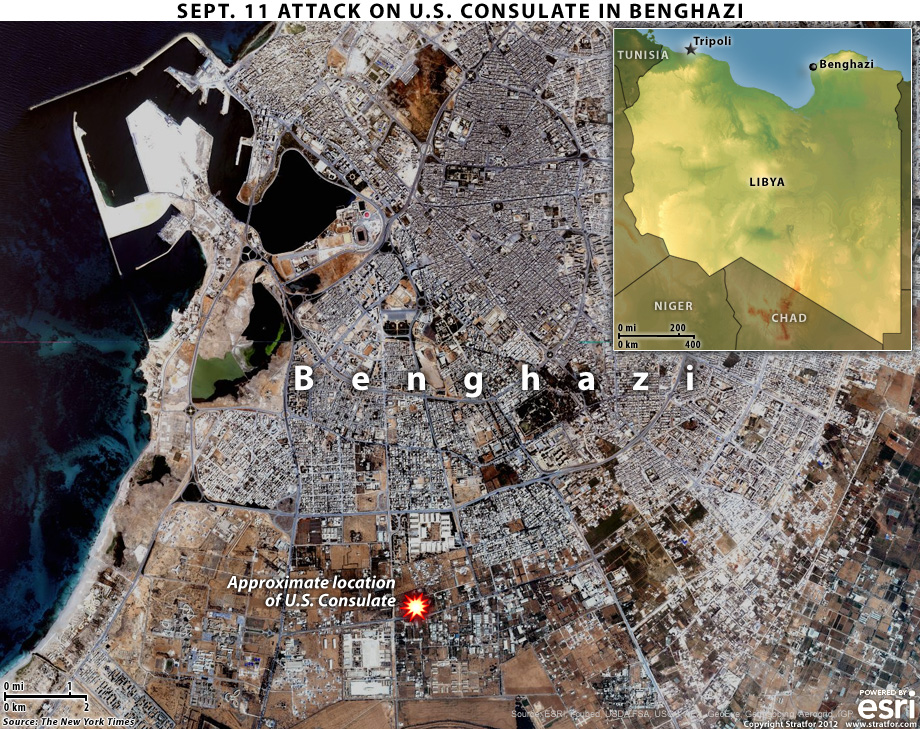
Libyan officials said the attackers then staged another raid, prompting the U.S. ambassador to try to escape. As he fled the attack with three other staff members, Stevens' vehicle was struck by a rocket-propelled grenade fired from an area nearby. A picture purportedly depicting the ambassador is being circulated on the Internet. The picture shows a dead Caucasian man being carried by a group of men.
Visit our Libya page for related analysis, videos, situation reports and maps.
