
Video Transcript:
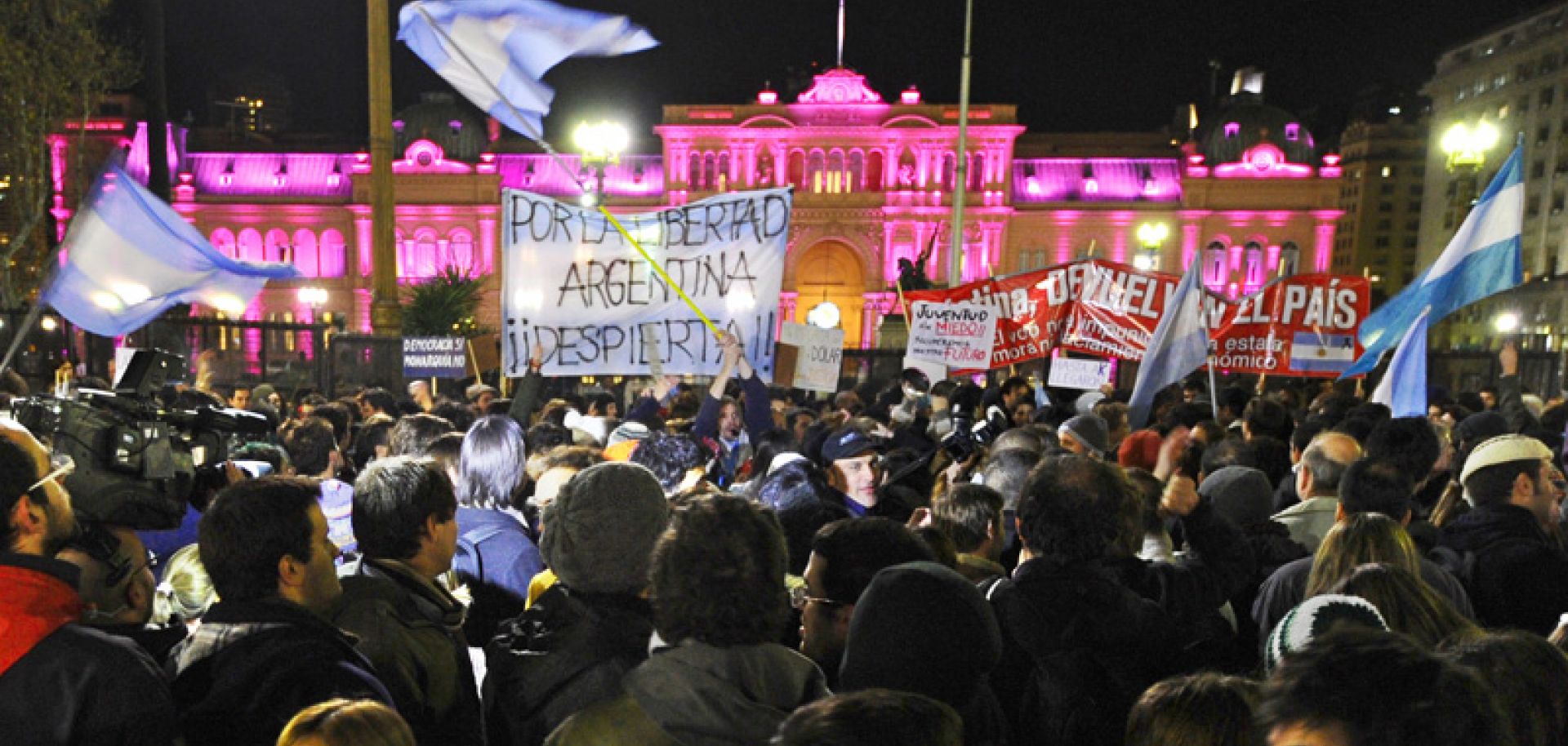
Argentine opinion polls are showing a precipitous decline in popularity of President Cristina Fernandez de Kirchner since her re-election in October. Her loss in popularity reflects building economic uncertainty that has resulted from high spending, dwindling foreign reserves and trade restrictions. Growing discontent is generating unrest, and while rapidly changing economic policies reflect the administration's adaptability, they also foretell increased instability.
The Argentine economy has for the most part boomed since the currency and debt crisis of 2001 and 2002. Strict price controls combined with high levels of government spending led the charge in spurring growth. As a net exporter of natural gas, oil and agricultural goods, Argentina was able to finance the boom with a strong inflow of foreign currency.
Since then, Argentina has gone from being a net exporter of energy to a net importer. This shift has made agriculture the country's most important sector, and has forced the state to spend billions of dollars on energy imports.
The backdrop to this outflow of dollars is the Argentine central government's continued isolation from international borrowing. The country proved to be a risky bet for lenders in the 2002 default and also publishes wildly inaccurate inflation statistics as a way of controlling the price of bonds whose value is tied to inflation. These factors have limited the government's ability to balance spending with borrowing, and as various pools of capital have been nationalized or otherwise absorbed by the government, financing options have shrunk.
The government could print more money, but inflation is already around 25 percent, and pesos will only buy things in the domestic market. For Argentina, controlling access to U.S. dollars is the key to the whole economic system. But those dollars are becoming increasingly scarce. To counteract this trend, the government has implemented a number of recent changes.
These include the April nationalization of Argentine energy company YPF in a gamble that the government will be able to directly boost oil exploration and production. They have also severely restricted imports, causing shortages of goods ranging from furniture to pharmaceuticals, and damaging relations with foreign trade partners. These include other Latin American countries and the European Union.
The latest announcement is that contracts made in dollars may be legally settled in pesos. This "pesification" process is designed to reduce domestic demand for dollars and is highly reminiscent of the 2002 crisis in which Argentina's dollar-denominated bank accounts were forcibly changed to pesos. The move caused riots and precipitated an economic crash that plunged half of the country into poverty.
Despite Fernandez's personal pledge to change her dollar accounts into pesos, Argentina isn't quite desperate enough to pesify bank accounts. But pressure is growing on the country's foreign reserves as spending obligations stack up and attempts to cut spending on social benefits fail under political pressure. If spending and financing obligations cannot be met, the country may be forced sharply reduce the value of the peso. Such a move would precipitate serious unrest and long-term economic uncertainty.
