
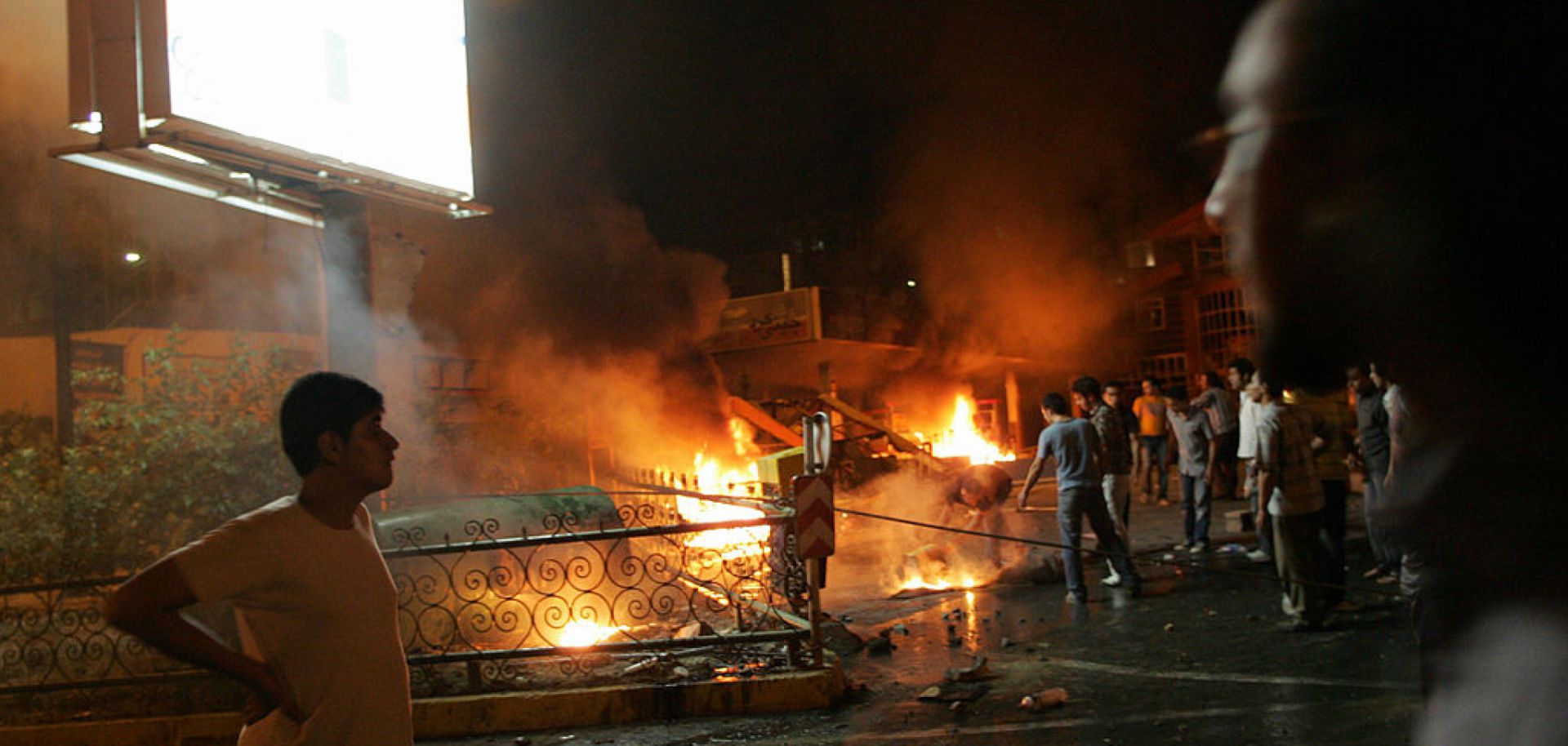
Iranians watch a burning fuel station in the northwest of Tehran set ablaze by protesters on June 27, 2007.
As many as 50 gasoline stations were reportedly torched early June 27 in Iran as angry citizens protested fuel rationing measures. There are additional unconfirmed reports that gasoline stations in several other cities across the country were also burned. Elsewhere, protesters reportedly blocked the main highway in Tehran, and clashes were said to have led to at least three deaths.
This unrest came in the 24 hours after the government — in an effort to curb the public's gasoline consumption — imposed a system of fuel rationing that allows consumers 26.4 gallons per month (15.8 gallons if they use compressed natural gas). A long and intense back-and-forth has been taking place between Iran's parliament, which wanted to raise prices, and President Mahmoud Ahmadinejad's administration, which favored rationing for fear of increasing inflation, already at 17 percent. In the end, the government did a bit of both.
On May 22, a 25 percent hike was introduced, setting the new price at roughly 42 cents per gallon, followed by rationing, which is being instituted via a smart card system. The reasons for the price hike and rations are rooted in Iran's chronic lack of refining facilities. Though Iran is a major crude oil exporter, it must import 7.9 million gallons of gasoline per day to meet demand. In 2006, Iran spent some $5 billion on gasoline imports from some 16 countries, with most coming from the United Arab Emirates. The current budget has an allocation of $2.5 billion. The difference in the figures from last year and this year has led to a situation in which, according to National Iranian Oil Co. International Affairs Director Hojjatollah Ghanimifard, Tehran can afford gasoline supplies until roughly the middle of August, while the current fiscal year ends in March 2008. The government will be forced to revise its rationing and import policies based on the results of the current rationing system, which is more or less a pilot program, because Tehran wants to cut down on its multibillion-dollar annual fuel import expenditures. The idea is to allocate money away from subsidized fuel and toward infrastructure projects.
Tehran is also trying to counter the rising demand for fuel, which has been growing at 10 percent annually. Moreover, the decision also factors in the uncertainty surrounding Iran's international position; additional sanctions over Tehran's nuclear program could put the clerical regime in even more of a crunch. The rationing also allows Iran's pragmatic conservatives, led by Expediency Council head Ali Akbar Hashemi Rafsanjani, to weaken the ultraconservatives, led by Ahmadinejad, by fueling public dissatisfaction with the president, in hopes that it could eventually lead to his exit from the political scene. The maverick leader is increasingly viewed as a liability in terms of domestic politics, and especially on the foreign policy front. Actual rationale notwithstanding, the move is very risky because there is no such thing as managed chaos.
The unrest generated by the fuel rationing could spiral out of control and threaten the entire system — not just the ultraconservative administration. It is true that the Islamic republic has proven to be resilient since it was founded more than 28 years ago, and the clerical regime has managed to contain opposition forces so that none poses a challenge to the state. But tampering with public need for fuel could create the kind of unrest capable of seriously wounding the regime, especially at a time when it is playing a high-stakes game with the United States over Iraq and pursuing a controversial nuclear program.
Considering that Iran is in the middle of negotiations with Washington, this rationing policy could reveal Iranian vulnerability, which Washington might use as leverage against Tehran. Iran would not be engaging in such a move unless it was really financially pressed into doing so. Ultimately, the regime hopes the negotiations over Iraq and its nuclear program will allow it to come out from underneath international sanctions, which will allow Tehran to acquire refining capabilities and reap other economic benefits. But until that happens, the Iranians are walking on thin ice.
