
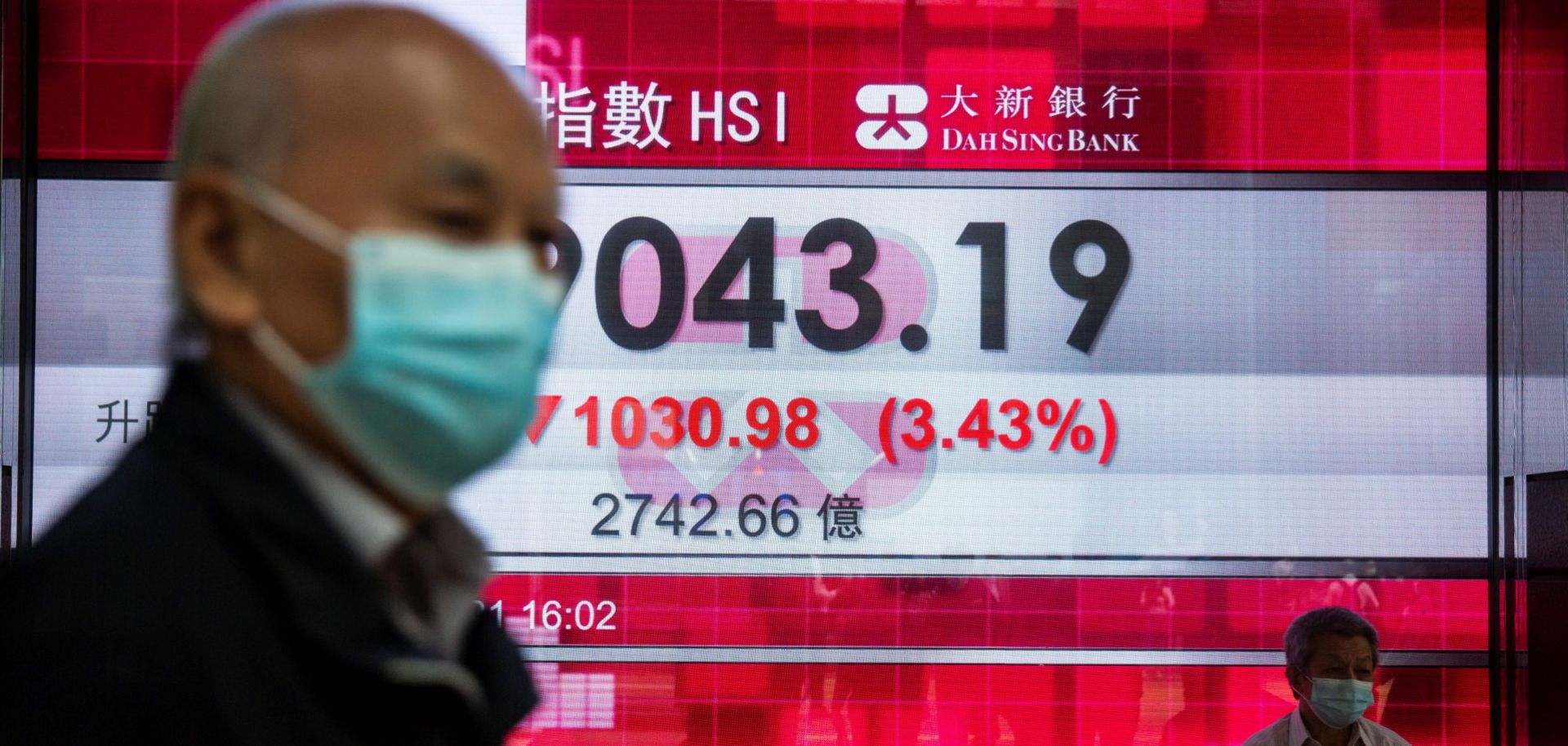
People walk past an electronic display showing Hong Kong’s Hang Seng Index in the city’s central district on Feb. 26, 2021.
Chinese lawmakers’ move to delay a decision on extending its anti-foreign sanctions law to Hong Kong signals an intent to avoid unduly jeopardizing the city’s status as a hub for foreign businesses. On Aug. 20, China’s National People’s Congress decided to postpone a planned vote on whether to implement the mainland’s sweeping anti-sanctions legislation in Hong Kong. This followed weeks of leaks and statements by Hong Kong officials that appeared to confirm the measures would be rolled out in the city.
- This new law is already in force in the mainland, laying out sweeping and open-ended powers for authorities to target both domestic and foreign companies that comply with foreign “discriminatory restrictive measures,” allowing visa denials, asset seizures or freezes, and bans on conducting transactions.
- Sources indicate that the decision to postpone the law’s rollout was motivated by policymakers’ fears of roiling markets and business sentiment in Hong Kong and China at a time when Beijing is already engaged in sweeping crackdowns on tech and other sectors.
- Hong Kong has previously tacitly accepted foreign businesses’ need to comply with Western sanctions despite fears that the National Security Law could entail penalties for such actions. In November 2020, leaks emerged that Hong Kong's securities regulator privately advised foreign financial institutions that they will be allowed to implement such sanctions without fear of reprisal from Hong Kong or Chinese authorities.
The implementation of the anti-foreign sanctions law in Hong Kong would massively boost risks for businesses operating in the city by forcing firms to balance complying with Western and Chinese dictates. However, both Chinese and Hong Kong authorities have an interest in maintaining business continuity in the city, even as they focus on political crackdowns. For foreign businesses, the delay in the law lowers risks of an abrupt disruption to their operations, reducing near-term uncertainty. Over the long term, however, Chinese authorities still have the power to implement these sweeping measures. Any clear, statutory anti-sanctions powers for Hong Kong officials would heighten uncertainty for businesses, which have yet to face such risks in Hong Kong in contrast to the longstanding, ad hoc anti-sanctions measures in the mainland.
- Mainland China relies on Hong Kong as a unique gateway for foreign capital to enter the more restrictive Chinese market. Hong Kong’s prominence has increased amid U.S.-China tensions given the risks for Chinese companies listing in the United States, making Hong Kong more attractive. China’s ongoing domestic crackdown and the bipartisan consensus in Washington on Chinese influence will enhance Hong Kong’s importance.
- The postponement raises the possibility that Beijing plans to reconsider the means by which it responds to foreign sanctions in Hong Kong, paring them down to reassure businesses. This could mean that Beijing chooses to rely on Hong Kong’s pro-Beijing government, which could shape corresponding legislation to blunt the impact on foreign firms or even limit measures to apply only to foreign officials responsible for passing sanctions.
