

What Happened
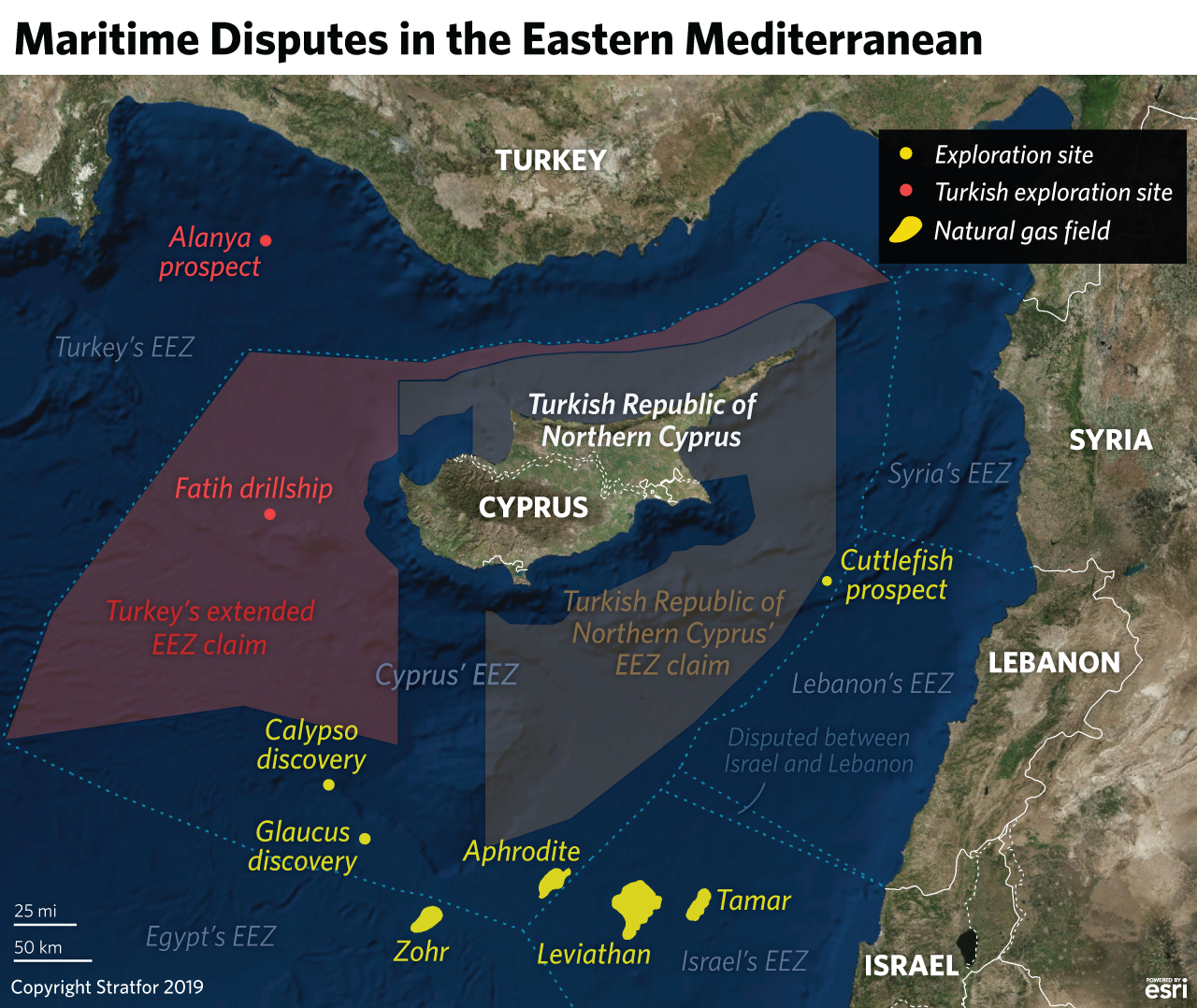
The countries of the Eastern Mediterranean are on course for some choppy waters. On May 6, Turkey said its ships would continue to explore for oil and gas in an area of the sea that Cyprus considers to be part of its exclusive economic zone. Turkey issued the statement after the United States and the European Union criticized it for sending a ship to explore for energy in a zone that Cyprus and breakaway Northern Cyprus dispute, prompting Cyprus to file international arrest warrants for the crew of the Turkish drilling ship.
Why It Matters
The developments form part of a broader dispute in the region. Since the mid-1970s, the island of Cyprus has been divided between Greek-speaking Cyprus in the south, which is a member of the European Union, and Turkish-speaking Northern Cyprus, which is recognized solely by Turkey. This division, in turn, is connected to unsolved territorial disputes between Greece and Turkey in the Aegean, in addition to Athens and Ankara's support for the governments in Cyprus and Northern Cyprus, respectively. In recent years, the discovery of energy resources in the Eastern Mediterranean has generated yet another point of contention, as Cyprus (and, by extension, Greece) and Northern Cyprus (and, by extension, Turkey) want to drill for oil and natural gas in the area.
The prospect of large hydrocarbon finds has also drawn the interest of a major outside power: the United States. The White House supports Cyprus' current plans to join forces with Israel and Egypt to explore for energy in the region and develop infrastructure to supply natural gas to Europe. The United States has economic interests (some of its companies, such as ExxonMobil, are conducting exploration off the Cypriot coast) and geopolitical considerations in the area, as the White House wants Europe to reduce its dependency on Russian natural gas.
What Happens Next
For Cyprus, the events suggest that reunification talks — which happen intermittently, depending on the political environment in the region — are unlikely to make progress anytime soon. It also means Cyprus' efforts to explore for energy in the disputed waters will continue to face disruptions from Turkey. (Last year, for instance, Turkish warships forced an Eni drillship operating off the Cypriot coast to leave the area.) For the European Union, the standoff adds yet another notch to its deteriorating ties with Turkey. Still, the Continental bloc is unlikely to introduce any meaningful sanctions against the country, especially as the European Union will need to maintain some degree of cooperation with Turkey to keep migration flows under control. As for Greece, the developments open a window of opportunity to try to take advantage of the United States' increasing interest in the Eastern Mediterranean. For all, in the end, a hot summer awaits.
