
Russia and China had been trying to negotiate a deal for more than a decade; Russia holds the world's largest natural gas reserves, and China's demand for natural gas is rapidly growing. However, the deal was impeded by several factors, including the fact that Russia sent most of its energy west and that China focused on domestic production as it imported natural gas via foreign sea routes.
But both countries' interests have aligned in recent years. For China, the cost of importing liquefied natural gas is high and its energy demands continue to grow. For Russia, the stability of demand from Europe — which is where Russia sends more than 80 percent of its natural gas exports — has been a growing concern, especially in recent months as Russia and the West have sparred over Ukraine.
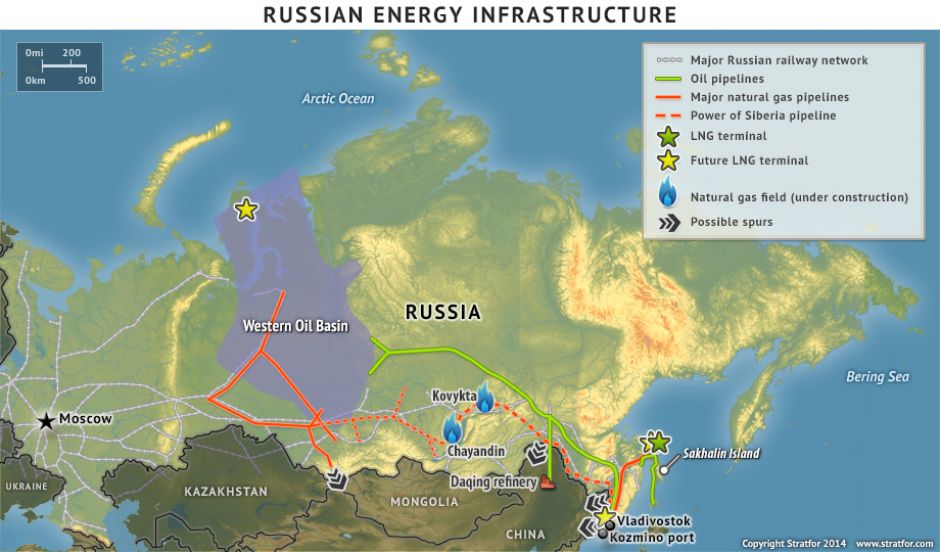
To seal the deal, however, Russia and China shifted the focus of the negotiations to each country's future. Although Russia had initially demanded $400 per thousand cubic meters of natural gas — China was intent on paying $300-$320 per thousand cubic meters — they agreed on a negotiated fee of $350 per thousand cubic meters. The change occurred this week after Russia gave China a variety of incentives, including offering Beijing a stake in Gazprom's Vladivostok liquefied natural gas terminal and a 19 percent stake in Russian oil company Rosneft. These prospective deals, which are still on the table, are meant to get China more involved in Russia and to upgrade China beyond a simple export destination for Russian commodities.
Moscow has long been wary of Chinese involvement inside Russia; it has preferred to deal with Western partners. But with Western investors currently withdrawing from the country, China would be an suitable replacement. As for China, its involvement in the Russian energy sector could give Beijing some influence in shaping the industry — and in turn Russia's future.
The energy deal does not mean that Beijing and Moscow are aligned politically, as they were periodically during the Cold War. But each country now has a use for the other, and their partnership could help ensure domestic stability and enhance their respective positions in the world.
